- Address: 345 Main Ave, Ferndale, Randburg, 2194, South Africa
- iclsales@icl.co.za
- Phone: +27 (0)11 521 2370
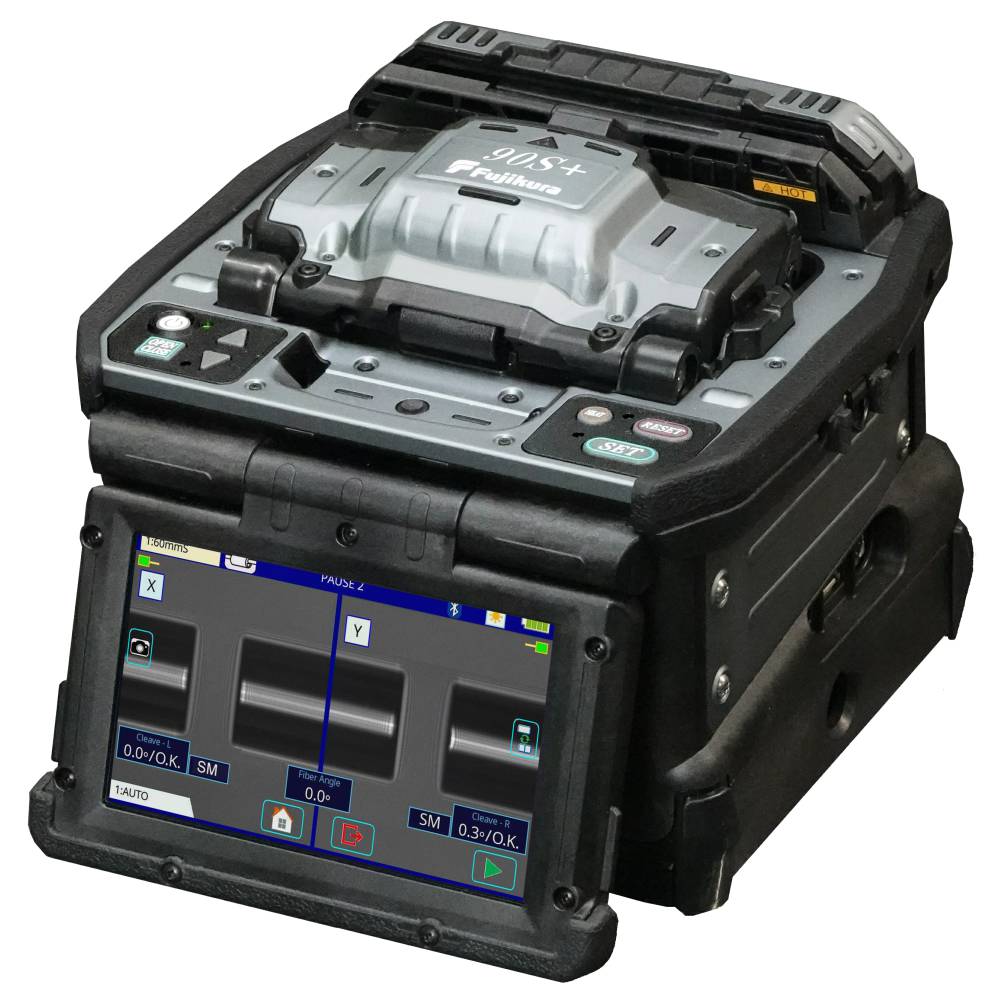
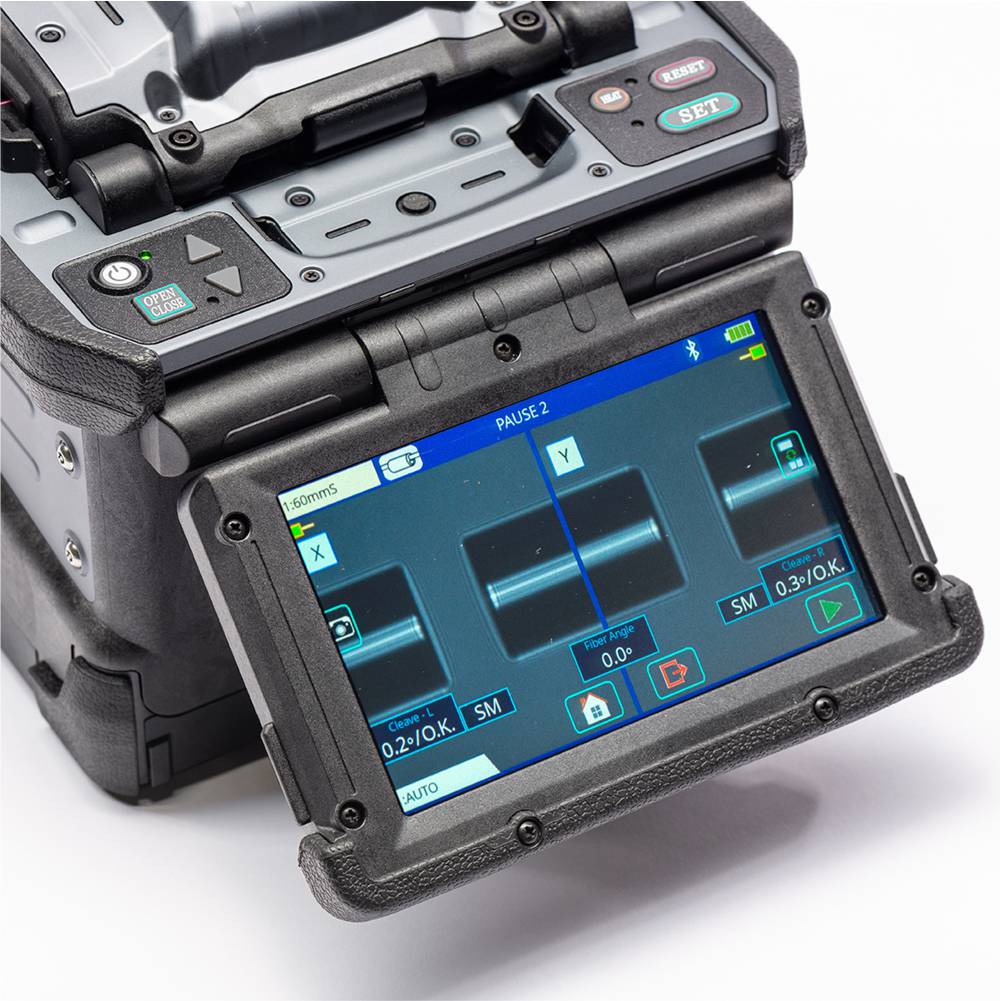
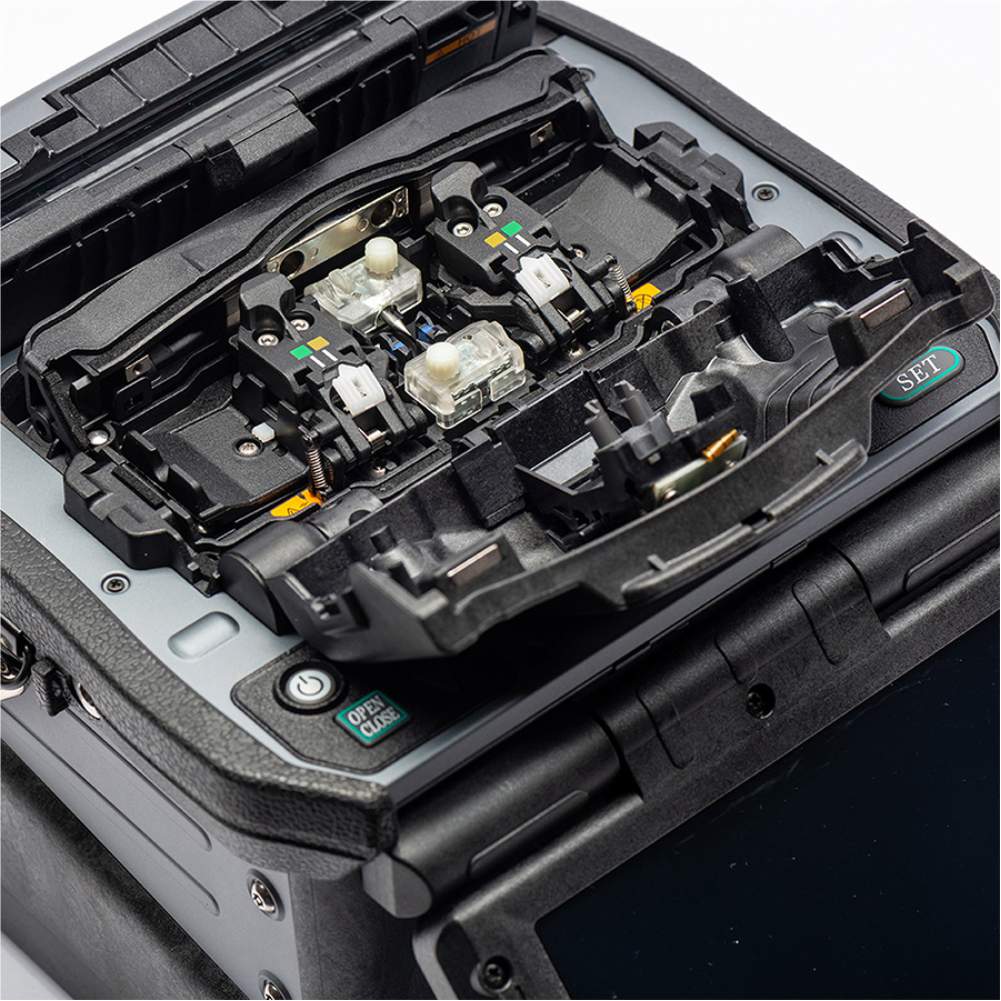
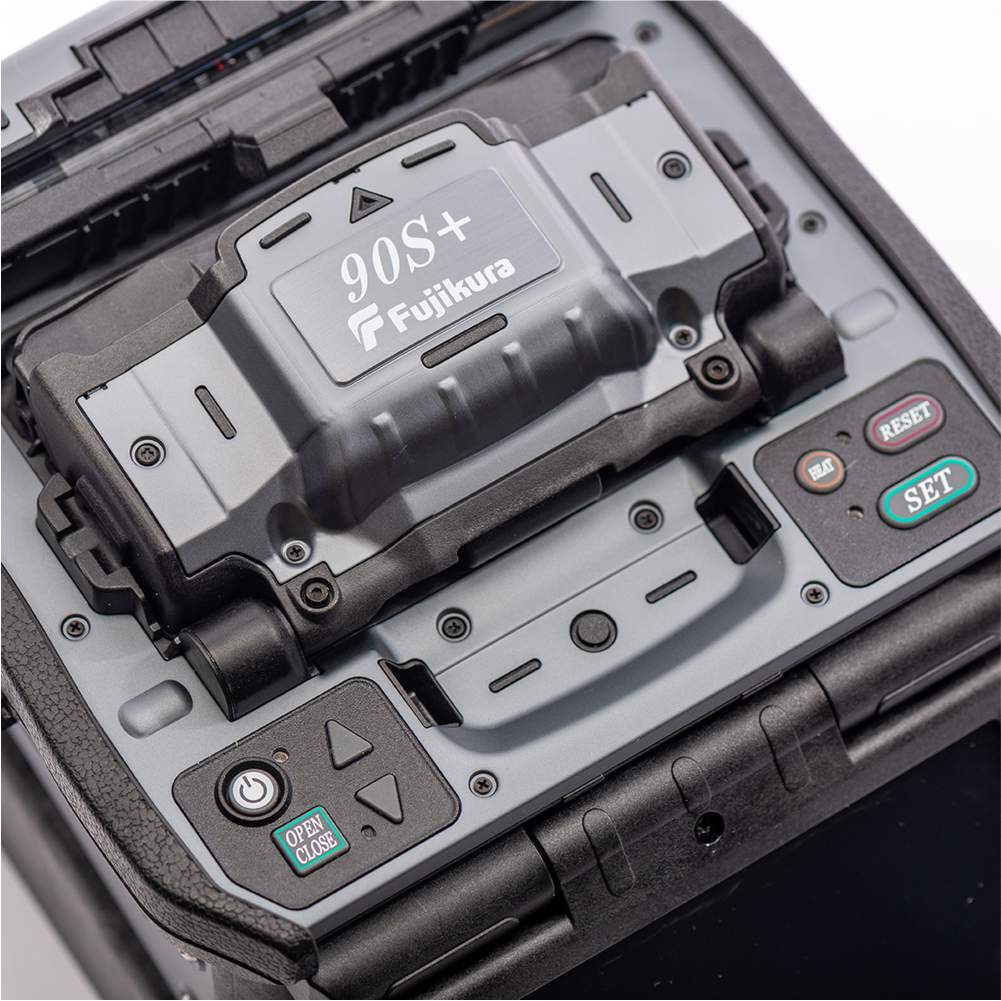
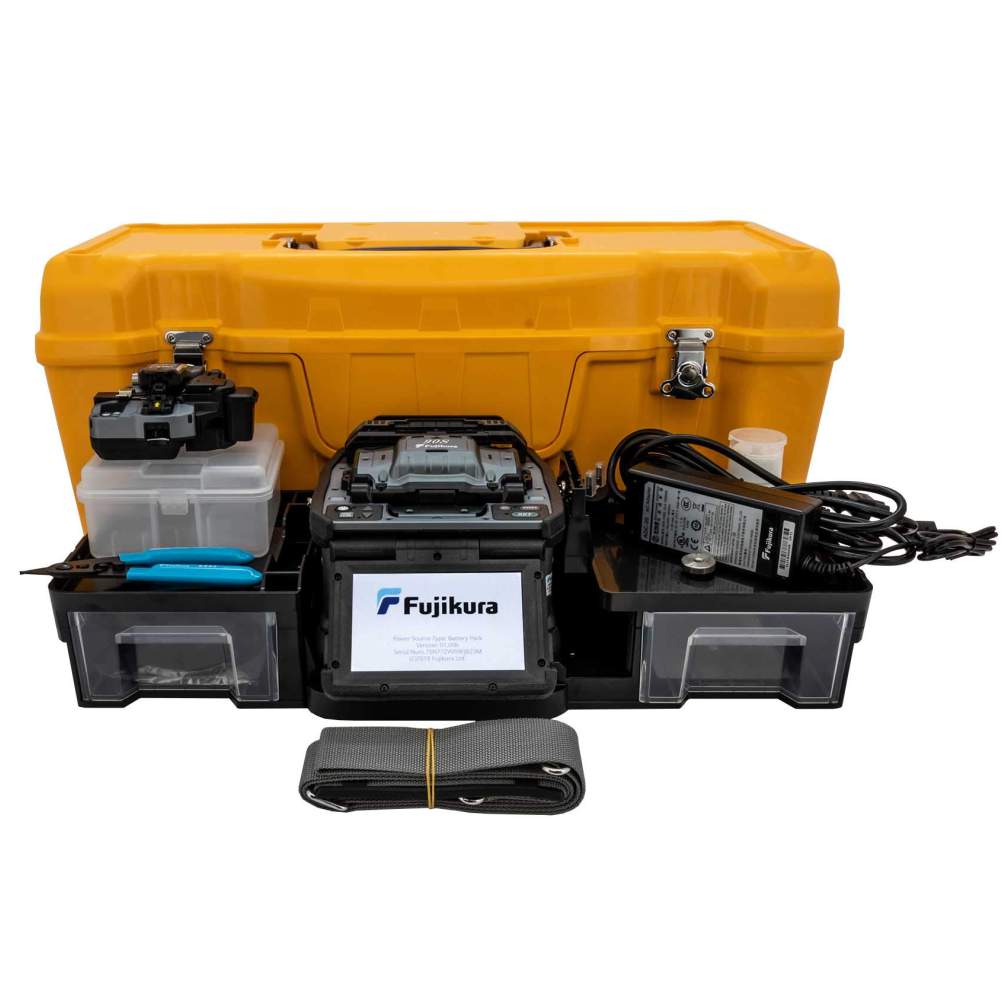
The 90S+ is a single fiber core alignment fusion splicer setting a new standard in the market for fusion splicing. The 90S+ is packed with a whole host of new and enhanced features specifically developed with the objective of enabling the user to work faster with higher precision.
Overall splice process time has been significantly reduced since the previous model (70S+). This has been achieved with a combination of improvements to the reaction time of the automated wind protectors and automated heater, new fiber retention clamps, improved universal sheath clamps and a redesigned internal structure that matches the protection sleeve to the fusion splice point which enables splicing to be achieved without the need of the user to touch the 90S+ once the process has started.
| Item | Specification | |
| Fibre alignment method | Active core alignment | |
| Fibre count can be spliced | Single fibre | |
|
Applicable fibre |
Fibre type |
Single mode optical fibre |
| Multi mode optical fibre | ||
| Cladding dia. | 80 to 150μm | |
|
Applicable coating |
Sheath clamp |
Coating dia.: Max. 3,000μm |
| Cleave length: 5 to 16mm *1 | ||
|
Fibre splice performance |
Splice loss *2 |
ITU-T G.652: Avg. 0.02dB |
| ITU-T G.651: Avg. 0.01dB | ||
| ITU-T G.653: Avg. 0.04dB | ||
| ITU-T G.655: Avg. 0.04dB | ||
| ITU-T G.657: Avg. 0.02dB | ||
|
Splice time *3 |
SM FAST mode: Avg. 7 to 9sec. | |
| AUTO mode: Avg. 14 to 16sec. | ||
|
Applicable protection sleeve |
Sleeve type | Heat shrinkable sleeve |
| Sleeve length | Max. 66mm | |
| Sleeve dia. | Max. 6.0mm before shrinking | |
|
Sleeve heat performance |
Heat time *4 |
60mm slim mode: Avg. 9 to 10sec. |
| 60mm mode: Avg. 13 to 15sec. | ||
| Fibre tensile test force | Approx. 2.0N | |
| Electrode life *5 | Approx. 5,000 splices | |
|
Physical description |
Dimensions W | Approx. 170mm without projection |
| Dimensions D | Approx. 173mm without projection | |
| Dimensions H | Approx. 150mm without projection | |
| Weight | Approx. 2.8kg including battery | |
|
Environmental condition |
Temperature | Operate: -10 to 50 °C / Storage: -40 to 80 °C |
| Humidity | Operate: 0 to 95%RH non-condensing / Storage: 0 to 95%RH non-condensing | |
| Altitude | Max. 5,000m | |
| AC adaptor | Input | AC100 to 240V, 50/60Hz, Max. 1.5A |
|
Battery pack |
Type | Rechargeable Lithium Ion |
| Output | Approx. DC14.4V / 6,380mAh | |
| Capacity *6 | Approx. 300 splice and heat cycles | |
| Temperature | Recharge: 0 to 30 °C / Storage: -20 to 30 °C | |
| Battery life *7 | Approx. 500 recharge cycles | |
|
Display |
LCD monitor | TFT 5 inches with touch screen |
| Magnification | 200 to 320x | |
| Illumination | V-grooves | LED lamp |
|
Data storage |
Splice mode | 100 splice modes |
| Heat mode | 30 heat modes | |
| Splice result | 20,000 splices | |
| Splice image | 100 images | |
| Notes *1: Cleave length range depending on fibre type: 5 to 16mm: 125μm cladding dia. / 250μm coating dia. 10 to 16mm: 125μm cladding dia. / 400 or 900μm coating dia. *2: Measured with a cut-back method relevant to ITU-T and IEC standard after splicing Fujikura identical fibres. The average splice loss changes depending on the environmental condition and fibre characteristics. *3: Measured at room temperature. The definition of splice time is from the fibre image appeared in LCD monitor to the estimated loss displayed. The average splice time changes depending on the environmental conditions, fibre type, and fibre characteristics. *4: Measured at room temperature with the AC adapter. The heat time is defined from the start beep sound to the finish beep sound. The average heat time changes depending on the environmental conditions, sleeve type and battery pack condition. *5: The electrode life changes depending on the environmental conditions, fibre type and splice modes. *6: Test condition (1) Splice and heat time: 2 minutes cycle (2) Using the splicer power save settings (3) Using a not degraded battery (4) At room temperature The battery capacity changes when testing with different conditions from the above. *7: The battery capacity decreases to a half after approx. 500 discharge and recharge cycles, The battery life is shortened further when using outside of the storage temperature range, operating temperature range, if completely discharged by storing for a long time without recharging. |
||