- Address: 345 Main Ave, Ferndale, Randburg, 2194, South Africa
- iclsales@icl.co.za
- Phone: +27 (0)11 521 2370


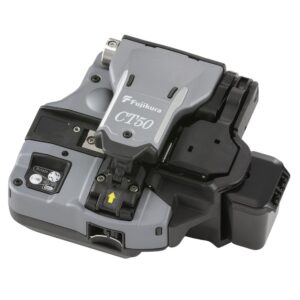
| Parameter | Value | |
|
Applicable Fibre |
Fibre Type |
Single-mode optical fibre |
| Multimode optical fibre | ||
| Fibre count | 2 single fibres | |
| Fibre count | Approx. 125 μm | |
|
Applicable Coating |
Adapter plate |
AD-16A: Max 900 μm coating diameter single fibre or 250 μm coating diameter for two fibres |
| AD-16B: Max. 3 mm jacket diameter | ||
| Fibre holder | FH-60 and FH-70 series – coating diameter dictated by specific fibre holder | |
|
Adapter plate |
AD-16A: 5 – 20 mm*1 | |
|
Cleave length |
AD-16B: Coating diameter – 250 μm or less: 5-20 mm*1 251 μm-900 μm: 10-20 mm 901 μm-3 mm: 14-20 mm |
|
| Fibre holder | Approx. 10 mm | |
| Cleave Angle*2 | Single fibre | Avg. 0.3 to 0.9 degrees |
| Blade Life*3 | Approx. 48,000 fibre cleaves | |
|
Physical description |
Dimensions W | Approx. 106 mm without projection*4 |
| Dimensions D | Approx. 95.5 mm without projection*4 | |
| Dimensions H | Approx. 49 mm without projection*4 | |
| Weight | Approx. 190 g including AD-16A | |
|
Environmental condition |
Temperature |
Operate: -10 to 50°C |
| Storage: -40 to 80°C | ||
|
Humidity |
Operate: 0 to 95%RH non-condensing | |
| Storage: 0 to 95%RH non-condensing | ||
|
Other features |
Blade rotation | Manual dial underneath cleaver |
|
Replaceable items |
Cleaver blade | |
| Fibre clamp pads | ||
| Fibre adapter base & scrap collector | Can be swapped position for ambidextrous operation | |
| Cleave count | Up to two individual bare fibres | |
| Notes 1. When the cleave length is less than 10 mm, the coating diameter should be 250 μm or less. Also, a blade height adjustment is required before cleaving. The average cleave angle is worse than the specification above when the cleave length is less than 10 mm. 2. Measured with an interferometer at room temperature, no with a splicer. A new blade was used to cleave the single fibres. The average cleave angle changes depending on the environmental conditions, blade condition, operating method, and cleanliness. 3. The blade life changes depending on the environmental conditions, operating method, and the fibre type cleaved. 4. Measured with the top lever closed. |
||